



ELECTRONICS AND COMMUNICATION ENGINEERING
Electronics and Communication Engineering is at the heart of how the world connects, communicates, and innovates. From smartphones and satellites to IoT devices and wireless networks, this program prepares students to design the technologies that power modern communication.
The curriculum blends electronic circuits, embedded systems, signal processing, communication systems, VLSI design, IoT, wireless technologies, and semiconductor fundamentals with hands-on labs, simulations, and industry-focused projects. Students learn how information is transmitted, devices are built, and intelligent communication systems are developed.
With rapid growth in 5G, smart devices, automation, robotics, and digital infrastructure, ECE plays a crucial role in future innovation.
The program prepares aspiring Electronics Engineers, Communication Engineers, Embedded Systems Developers, IoT Specialists, and VLSI Engineers to build connected technologies and drive the digital world forward.
Infrastructure
The department provides modern IT infrastructure and advanced computer laboratories to support practical learning, technical skill development, and industry-aligned education.
The Programming Lab enables hands-on training in programming languages such as C, C++, Java, and Python, supported by high-speed internet and multi-platform computing environments including Windows and Linux.
The DBMS & Artificial Intelligence Lab supports learning in database management, artificial intelligence, machine learning fundamentals, and data-driven application development using industry-relevant tools.
The Networking Lab facilitates practical exposure to computer networking, network design, simulation, and network security concepts through professional software and lab setups.
The Operating Systems Lab focuses on system administration, server management, virtualization, and cybersecurity fundamentals across multiple operating environments.
The Digital Electronics & Computer Organization Lab strengthens understanding of digital electronics, computer architecture, and hardware fundamentals through practical experimentation.
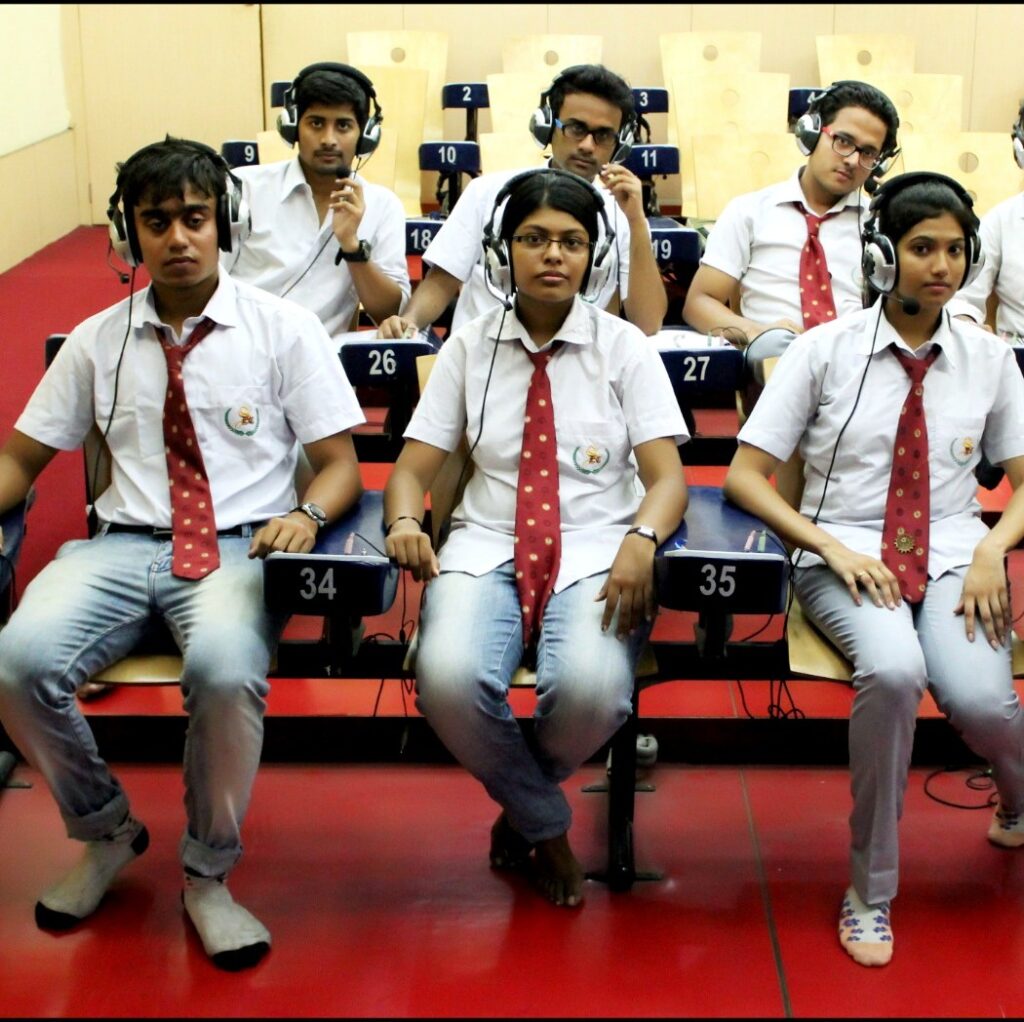
A dedicated Seminar Room supports presentations, technical workshops, seminars, collaborative learning, and academic discussions, enhancing communication and professional skills.
Career Prospects
Behind every smart device, network, and connected system is Electronics and Communication Engineering. This field powers how the world communicates — from mobile networks and satellites to embedded systems, IoT, and next-generation digital infrastructure.
-
Electronics Engineer
-
Communication Engineer / Telecom Engineer
-
Embedded Systems Engineer
-
VLSI Design Engineer
-
IoT Engineer
-
Signal Processing Engineer
-
Network Engineer
-
RF / Wireless Engineer
-
Hardware Design Engineer
-
Automation & Robotics Engineer
-
PCB Design Engineer
-
Semiconductor Engineer
-
Satellite & Aerospace Electronics Engineer
-
5G / Wireless Technology Specialist
-
Software Engineer (Embedded / Electronics)
-
Technical Consultant
-
Researcher / Academician
ECE graduates can work across telecom, semiconductor, consumer electronics, automotive, aerospace, defence, robotics, IoT, and emerging technology industries.
Supporting Departments
Mathematics
Physics
English